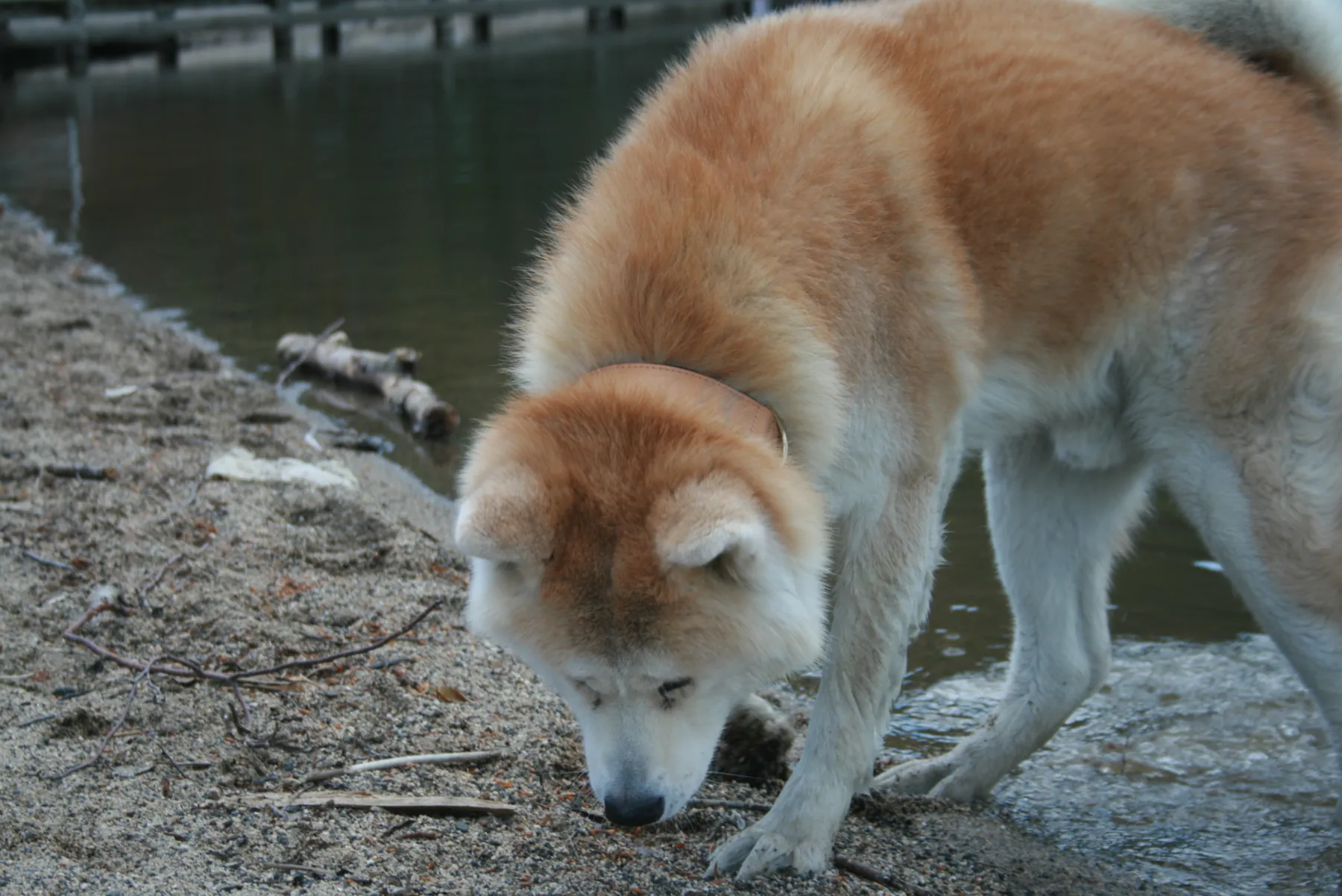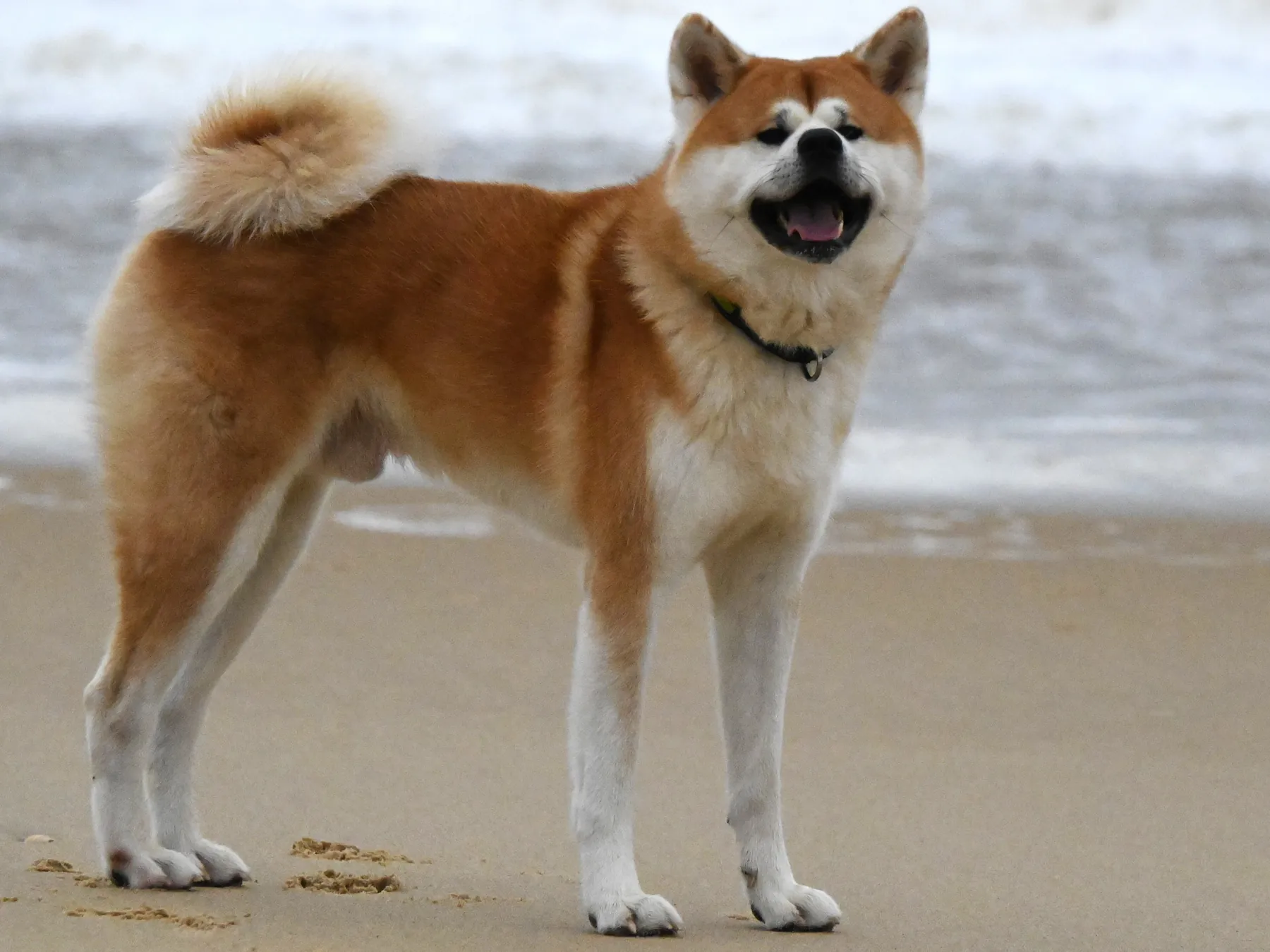
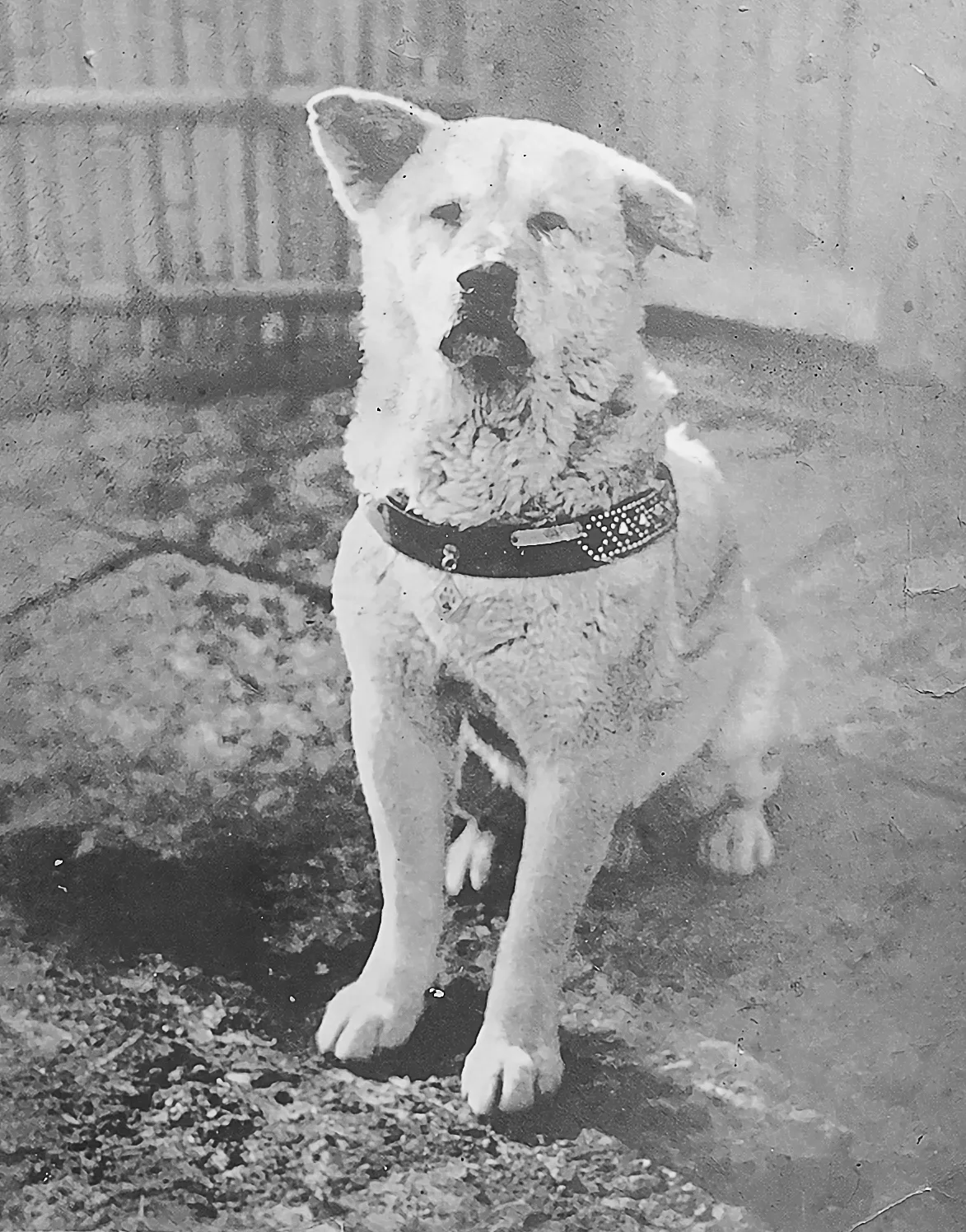
Hachikō was a Japanese Akita who went to Tokyo's Shibuya Station for almost ten years to wait for his owner, Professor Hidesaburō Ueno, who died in 1925. His story, two films and the statue outside the station made him the most famous dog in Japan and the most famous Akita in the world. Much of what is retold about him, however, is not accurate.
Hachikō at a glance
| Fact | Hachikō |
|---|---|
| Born | November 1923, near the town of Ōdate, Akita Prefecture |
| Breed | Japanese Akita, cream-white |
| Owner | Hidesaburō Ueno, professor of agriculture at Tokyo Imperial University |
| Waited | from May 1925 to March 1935 |
| Died | 8 March 1935 in Shibuya |
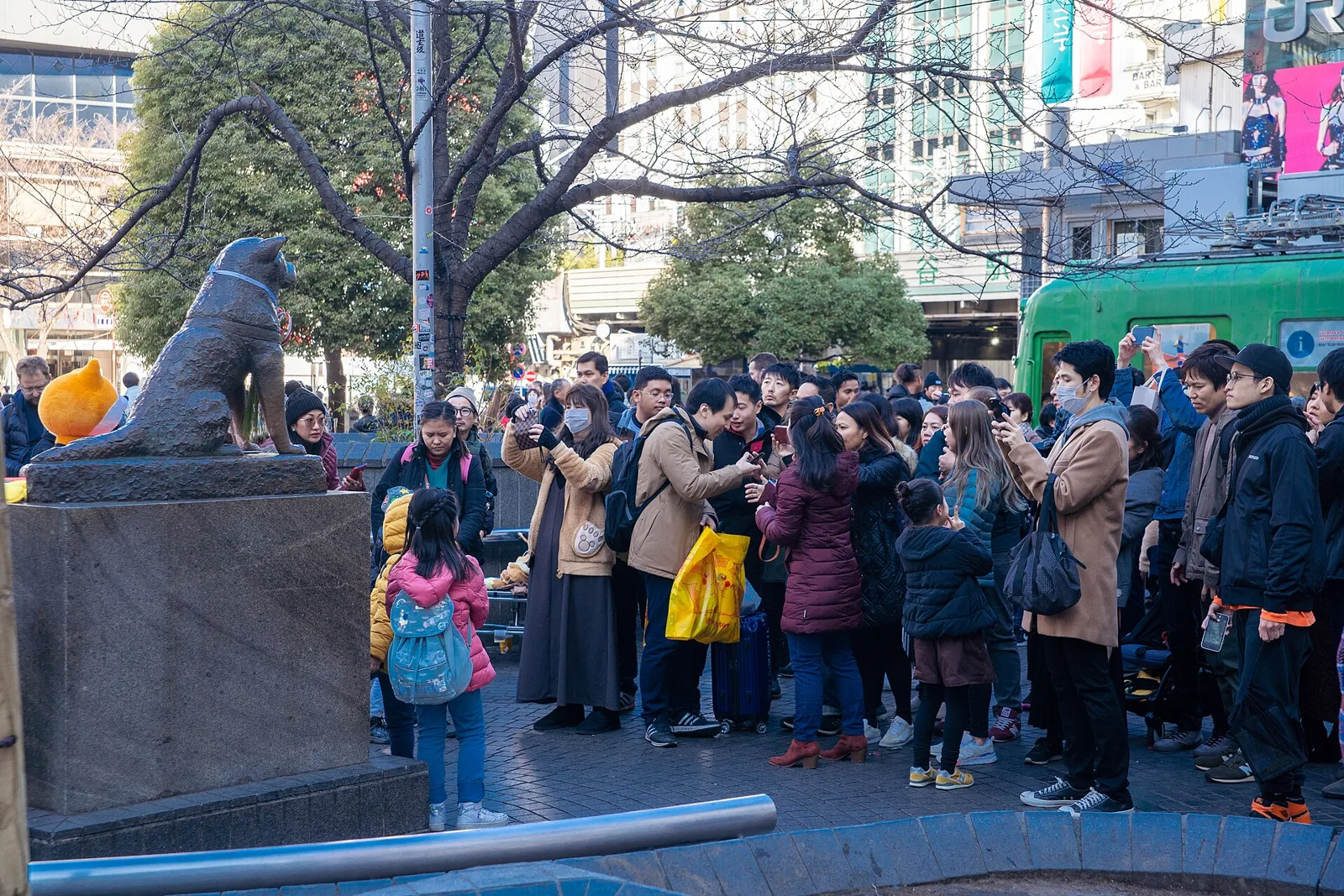
| Statue | outside Shibuya Station, first in 1934, current one since 1948 |
A puppy from Ōdate
Hachikō was born in November 1923 on a farm near Ōdate in Akita Prefecture, the region the breed comes from. In January 1924, as a two-month-old puppy, he was sent by train to Tokyo, to Professor Hidesaburō Ueno, an expert in agricultural engineering at Tokyo Imperial University.
Ueno lived in the Shibuya district and commuted to work every day. Hachikō met him at Shibuya Station in the evenings, and locals and station staff soon got to know the pair. They spent a little over a year together.
The day Ueno did not come back
Professor Ueno died suddenly at work on 21 May 1925. That evening Hachikō went to the station as usual and waited.
Over the following months he changed homes several times, but kept returning to Shibuya. In the end he stayed with Kikusaburō Kobayashi, Ueno's gardener, who lived near the station. From there he went to the station almost every day, at the time when Ueno's train used to arrive. This went on for almost ten years.
So Hachikō was not a stray, even though many people saw him as one. He had a home and people who looked after him. Before he became famous, people around the station were not kind to him: they chased him away, and dog catchers took him several times because someone had stolen his collar and tag.
How he became famous
Hirokichi Saitō, a researcher of Japanese dog breeds and founder of a society for their preservation, noticed Hachikō in 1928 and started writing about him. At the time Saitō found only about thirty purebred Akitas in all of Japan, and Hachikō was one of them.
In October 1932 the Asahi Shimbun newspaper published an article about an old dog who had been waiting for years for his dead master. The story spread across Japan. People came to the station to see him and bring him food, and schools held him up as an example of loyalty. In Japan he is still called chūken Hachikō, faithful dog Hachikō.
Saitō also recorded what Hachikō was like: a calm, gentle dog who did not bark at other dogs or people. He stood 64.5 cm tall, and over the years his left ear came to droop.
A statue Hachikō saw himself
In April 1934 a bronze statue of Hachikō by the sculptor Teru Andō was unveiled outside Shibuya Station. Hachikō was at the unveiling. Andō deliberately made it true to life, with the drooping ear, rather than as an idealised Akita.
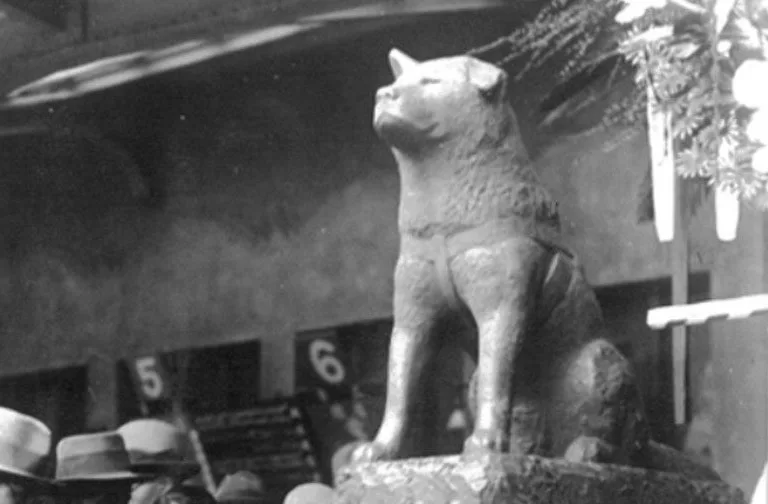
During the Second World War the statue was melted down for the war industry. In 1948 Andō's son Takeshi made a new statue, which still stands by the station exit named after Hachikō and is one of the best-known meeting points in Tokyo.
What Hachikō died of
Hachikō was found dead in a street in Shibuya on 8 March 1935. He was 11 years old. Newspapers across Japan and abroad reported his death.
For a long time people said he was killed by yakitori skewers that vendors near the station had given him, because vets found them in his stomach. The necropsy at the time already showed that the skewers had not damaged his stomach. When University of Tokyo scientists re-examined his preserved organs with modern methods in 2011, they found that Hachikō had cancer and heartworm, a parasitic disease of the heart and lungs.
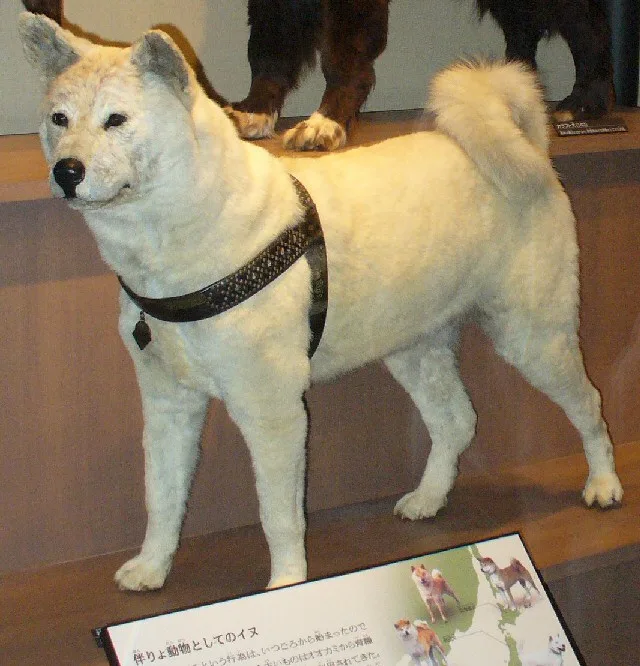
Part of his remains are buried next to Professor Ueno in Aoyama Cemetery in Tokyo, and his mounted body is on display at the National Museum of Nature and Science in Tokyo.
The story and the films
Hachikō's story has been filmed twice. The Japanese film Hachikō Monogatari was released in 1987, and the American Hachi: A Dog's Tale in 2009. The American version moves the story to the United States, with Richard Gere playing the professor.
The films simplify. They do not show how many times Hachikō changed homes, how he was treated before he became famous, or how many people looked after him. In reality, the gardener Kobayashi and his family fed him, nursed him and let him go to the station for years.
Where you can see Hachikō today
- the statue outside Shibuya Station in Tokyo, by the exit that bears his name
- his mounted body at the National Museum of Nature and Science in Ueno Park, Tokyo
- his grave next to Professor Ueno in Aoyama Cemetery, Tokyo
- the statue at the University of Tokyo, unveiled in 2015, showing Hachikō jumping up to greet the professor
- the statues outside the station in Ōdate, his home town
A memorial ceremony is held at the Shibuya statue every year on 8 March.
What Hachikō tells us about the Japanese Akita
Hachikō's story is often told like a fairy tale, but much of it is typical of the breed. The Japanese Akita bonds with its people strongly and for life, and stays calm and reserved with everyone else. The FCI standard describes its temperament as composed, faithful, docile and receptive, and Saitō's description of Hachikō as a calm dog who did not bark at others fits well. We write more about this in Japanese Akita temperament.
Hachikō's fame also helped the breed itself. When Saitō began writing about him, there were only about thirty purebred Akitas left in Japan. The story sparked interest in the Akita across Japan and later around the world: after visiting Japan in 1937, Helen Keller took the first Akita to the USA.