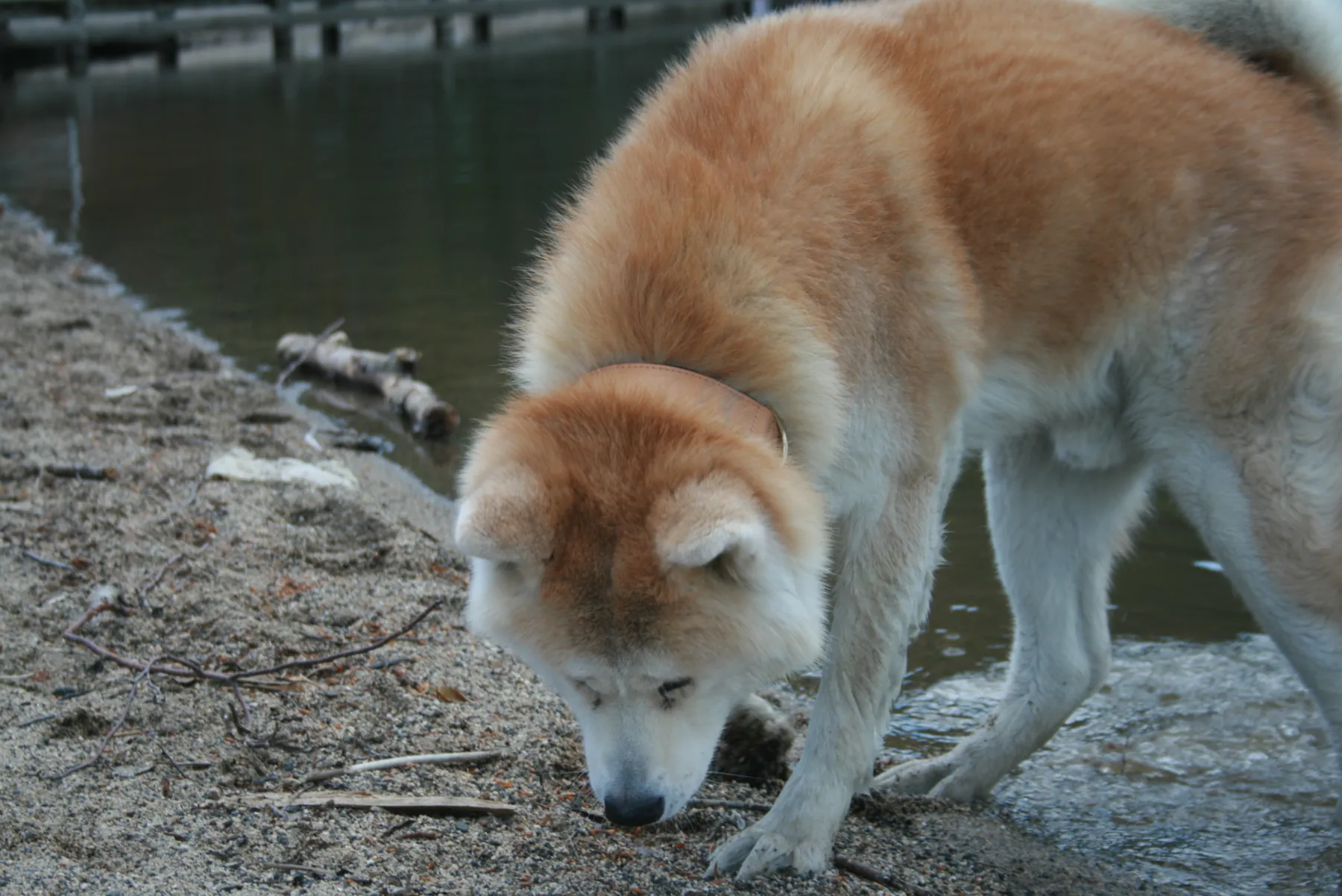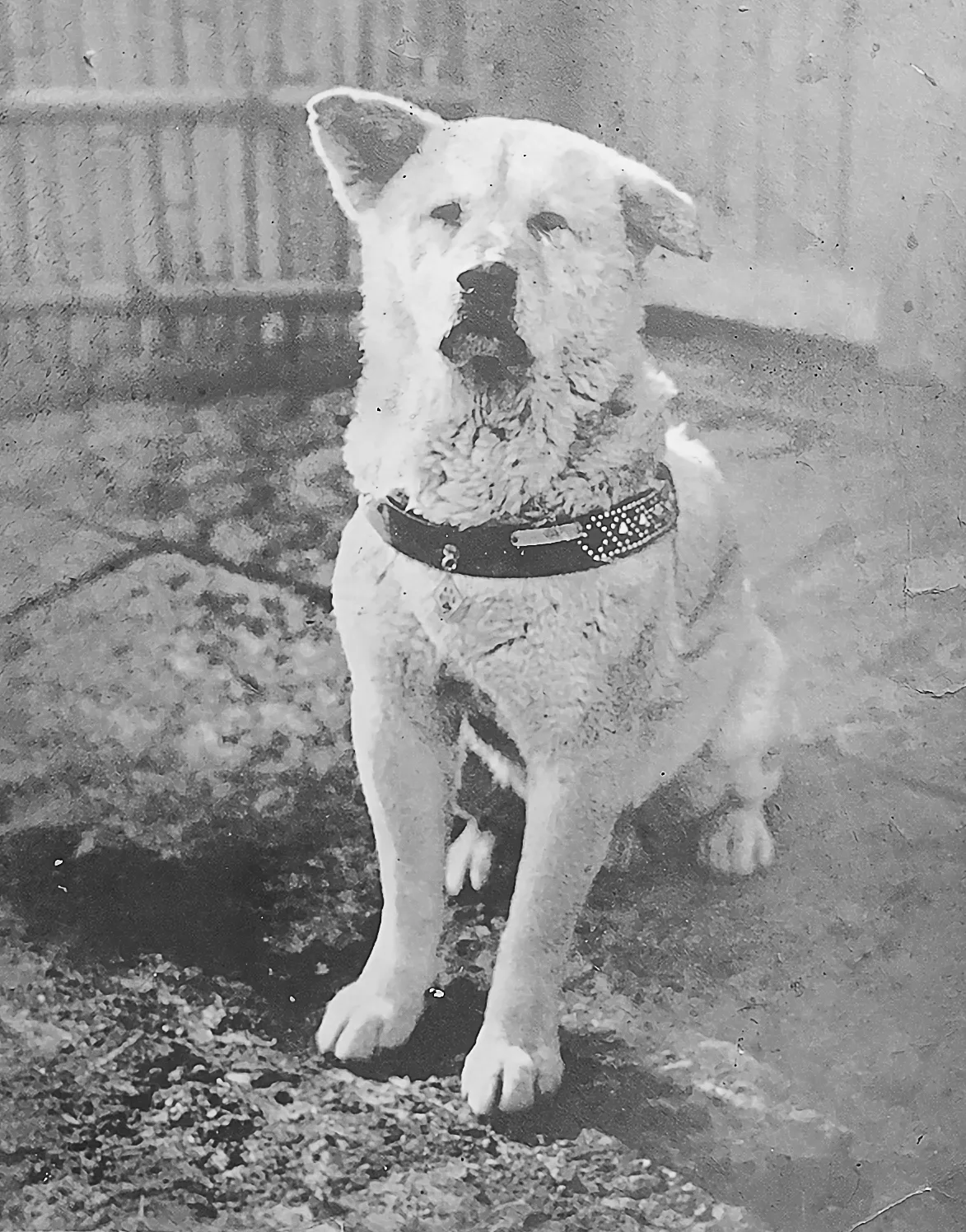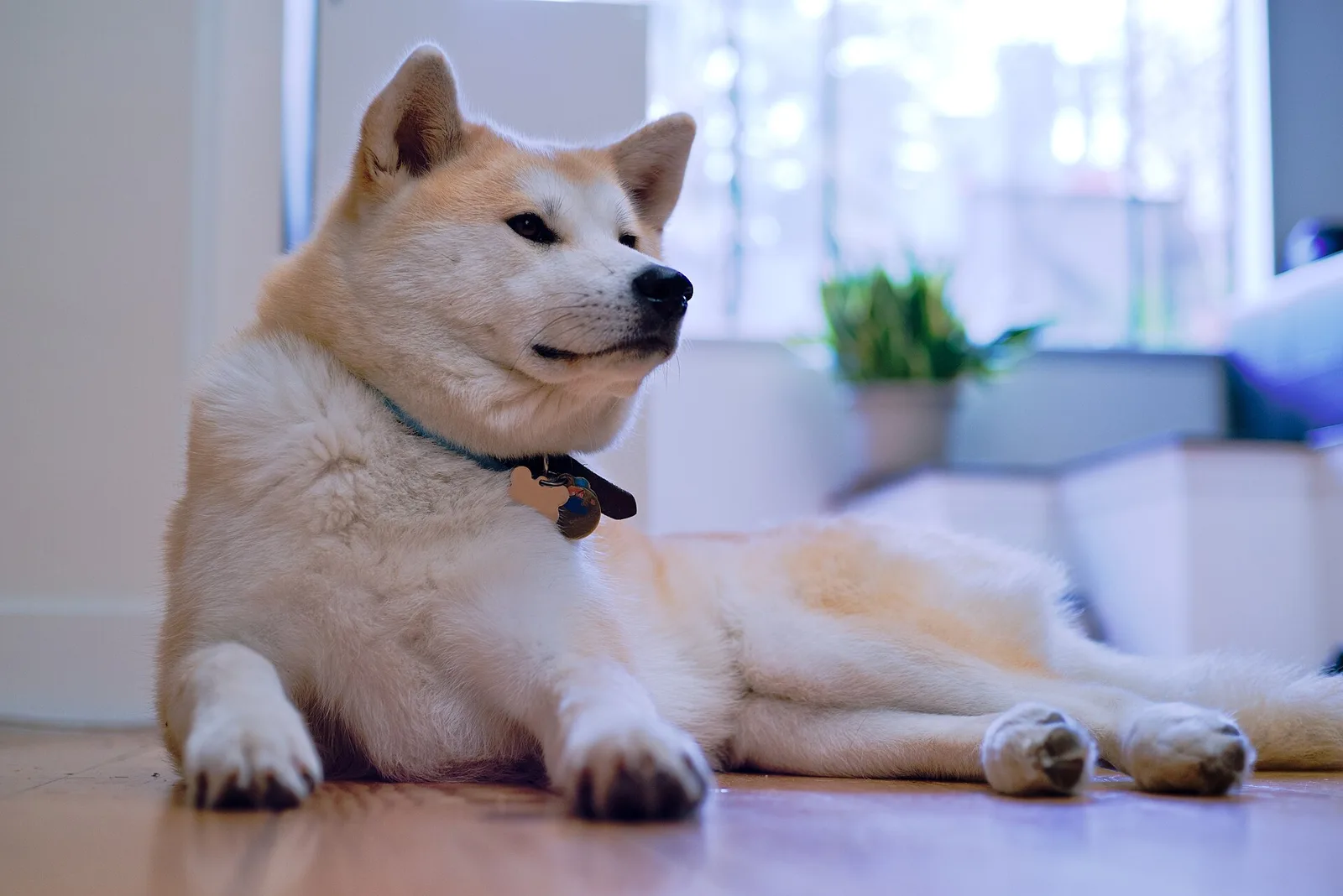
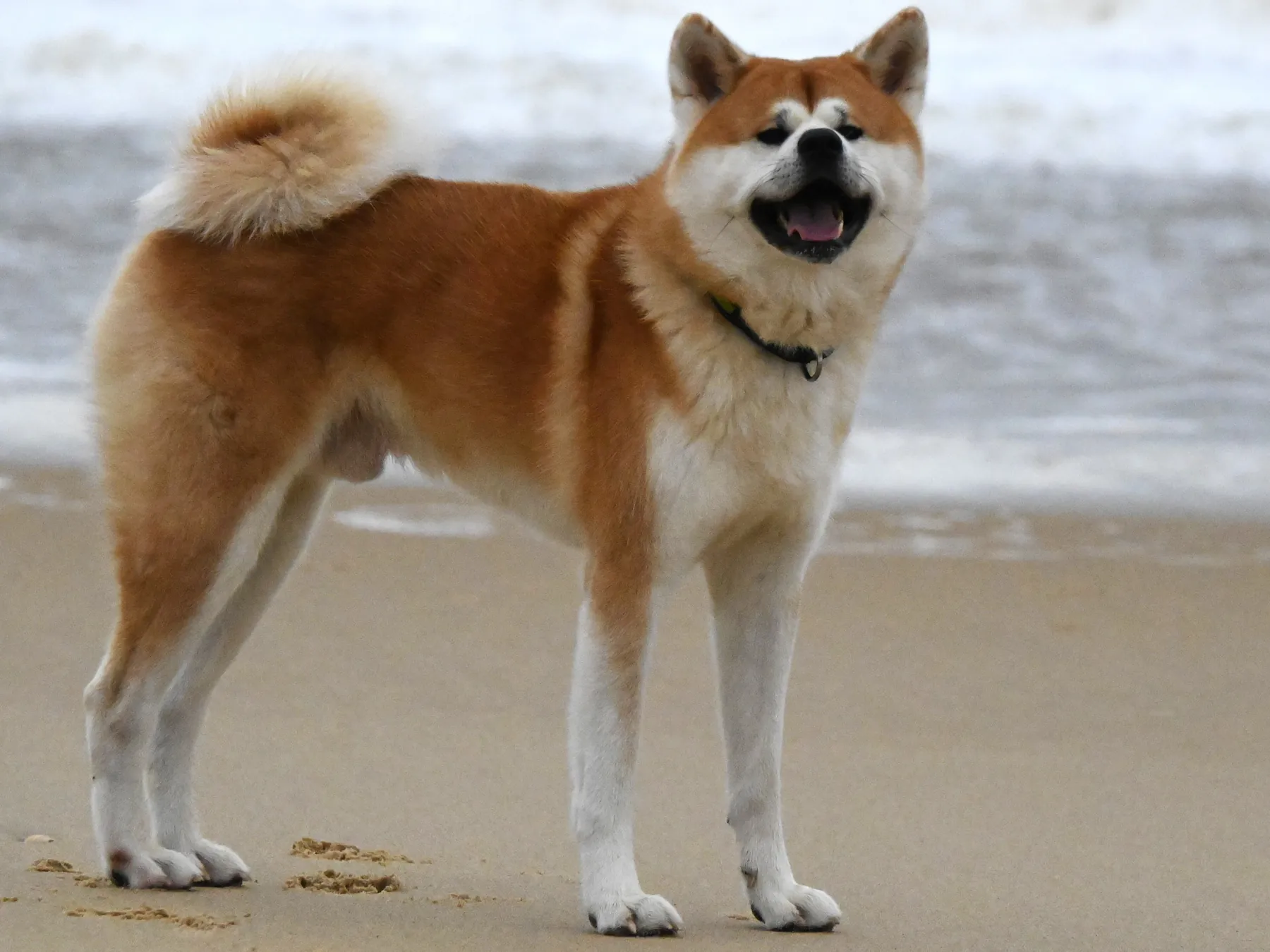
The Japanese Akita, also known as the Akita Inu, is a large breed from the mountainous Akita Prefecture in northern Japan. According to the standard of the Fédération Cynologique Internationale (FCI No. 255), it is a calm, faithful and receptive dog, and males stand around 67 cm at the withers. It is not the same as the American Akita, although the two are often confused.
The Japanese Akita at a glance
| Trait | Details |
|---|---|
| Origin | Japan, Akita Prefecture |
| FCI classification | Group 5 (Spitz and primitive types), Section 5 (Asian Spitz) |
| Standard | FCI No. 255 |
| Height at withers | males 67 cm, females 61 cm (±3 cm) |
| Colours | red, sesame, brindle, white |
| Coat | double: harsh outer coat and soft, dense undercoat |
| Life expectancy | usually 10 years or more |
| Exercise needs | high, every day |
Where the Japanese Akita comes from
In Akita Prefecture, medium-sized dogs known as Matagi Akitas helped hunt bears from 1603, and were also used for dog fighting. From 1868 they were crossed with Tosas and mastiffs, so they grew larger but lost some of their spitz features. Dog fighting was banned in 1908, and the breed was preserved and further developed as a large Japanese breed. In 1931, nine outstanding dogs were designated a Natural Monument of Japan.
The Second World War nearly destroyed the breed. Dogs were used as a source of fur for military uniforms, and the police confiscated all dogs except German Shepherds needed by the army. Some breeders therefore crossed their Akitas with shepherds. After the war there were three types of Akita: Matagi, fighting and shepherd. Japanese breeders then crossed back to Matagi Akitas to remove the foreign influence and restored the original breed as we know it today.
The most famous Akita of all time is Hachikō, the dog who went to Tokyo's Shibuya Station for years to wait for an owner who never came back. Read his story in Hachikō: the true story of the most loyal dog.
The Japanese and American Akita are not the same breed
After the war, American soldiers took Akitas of the Dewa line to the USA, dogs that showed the influence of mastiffs and German Shepherds. The American and Japanese kennel clubs did not recognise each other's pedigrees at the time, so the Akita developed separately in the USA. Today these are two breeds with two standards: the Japanese Akita (FCI 255) and the American Akita (FCI 344). In some countries they were officially separated only recently, in Great Britain in 2006.
You can see the difference at first glance. The American Akita has a more massive head shaped like a blunt triangle, may have a black mask and pinto colouring, and males stand 66 to 71 cm. In the Japanese Akita, a black mask and markings on a white ground are disqualifying faults. All the differences are covered in Japanese Akita vs American Akita.
What a Japanese Akita looks like
The standard describes it as a large, sturdily built and well-balanced dog, with clear differences between males and females. The body is slightly longer than the dog is tall, in a ratio of 10 : 11, and females are a little longer than males.
The head has a broad forehead with a distinct furrow, the nose is large and black, and the muzzle is moderately long and strong, without a pointed tip. The eyes are relatively small, almost triangular because the outer corner rises, and as dark brown as possible. The ears are small, thick and triangular, erect and inclined forward. The tail is set high, thick and tightly curled over the back.
The coat is double. The outer coat is harsh and straight, and the undercoat soft and dense. The hair is slightly longer at the withers and rump, and longest on the tail. A long, shaggy coat is a disqualifying fault under the standard.
Colours and urajiro
The standard allows four colours: red, sesame, brindle and white. All except white must have urajiro, light hair on the sides of the muzzle, the cheeks, under the jaw, on the neck, chest, belly, the underside of the tail and the inside of the legs. What each colour looks like, and why a black Japanese Akita does not exist under the standard, is explained in Japanese Akita colours.
Temperament
The standard describes the temperament of the Japanese Akita in four words: calm, faithful, docile and receptive. Aggressiveness and excessive shyness are disqualifying faults in the standard.
Our Akitas are true representatives of the Japanese Akita character. Towards the members of their family they are extremely affectionate, gentle and devoted. They enjoy being close to their people, love attention and tenderness, but keep a certain independence that is so typical of this breed. Their affection is not pushy. They simply like being part of family life, whether that means doing things together or quiet moments at home.
On the other hand, towards strangers they show the typical Akita reserve. They will not go up to everyone straight away, nor will they automatically seek attention from someone they do not know. They need time to size up a new person and build trust. That is why approaching an Akita takes calm, respect for its personal space and an understanding of its character. Rushing up, pushy petting or insisting on contact is not the right way to get to know this breed.
When approached the right way and allowed to decide for themselves whether they want contact, Kyo and Eru can show their gentle, friendly side to people outside the family as well.
This combination of deep devotion to its own family, independence and dignified reserve towards strangers is one of the things that make the Japanese Akita so special. An Akita is not a dog that will seek the affection of everyone it meets, but the bond of trust it builds with its people is extraordinarily strong.
We write more about temperament and how Akitas get on with children and other dogs in Japanese Akita temperament.
What an Akita asks of its owner
The Japanese Akita is a large, active dog that needs plenty of daily exercise and enough space. The coat is dense and double, so it needs brushing several times a week, and more often during the shedding season. An Akita usually lives ten years or more, so deciding on one is a decision for the next ten years or more.
The Japanese Akita is not a dog for everyone. Future owners need to be ready for an intelligent, independent and sometimes stubborn dog that calls for patience, consistent training and mutual respect. An Akita will give you incredible loyalty and devotion, but you have to earn its trust and respect, not force them.
Health
Responsible breeders test the parents before mating, most often hips and elbows for dysplasia, and DNA tests exist for some hereditary diseases. When choosing a puppy, ask the breeder for the results of both parents and check them against the pedigree. The FCI standard itself says that only functionally and clinically healthy dogs may be used for breeding.