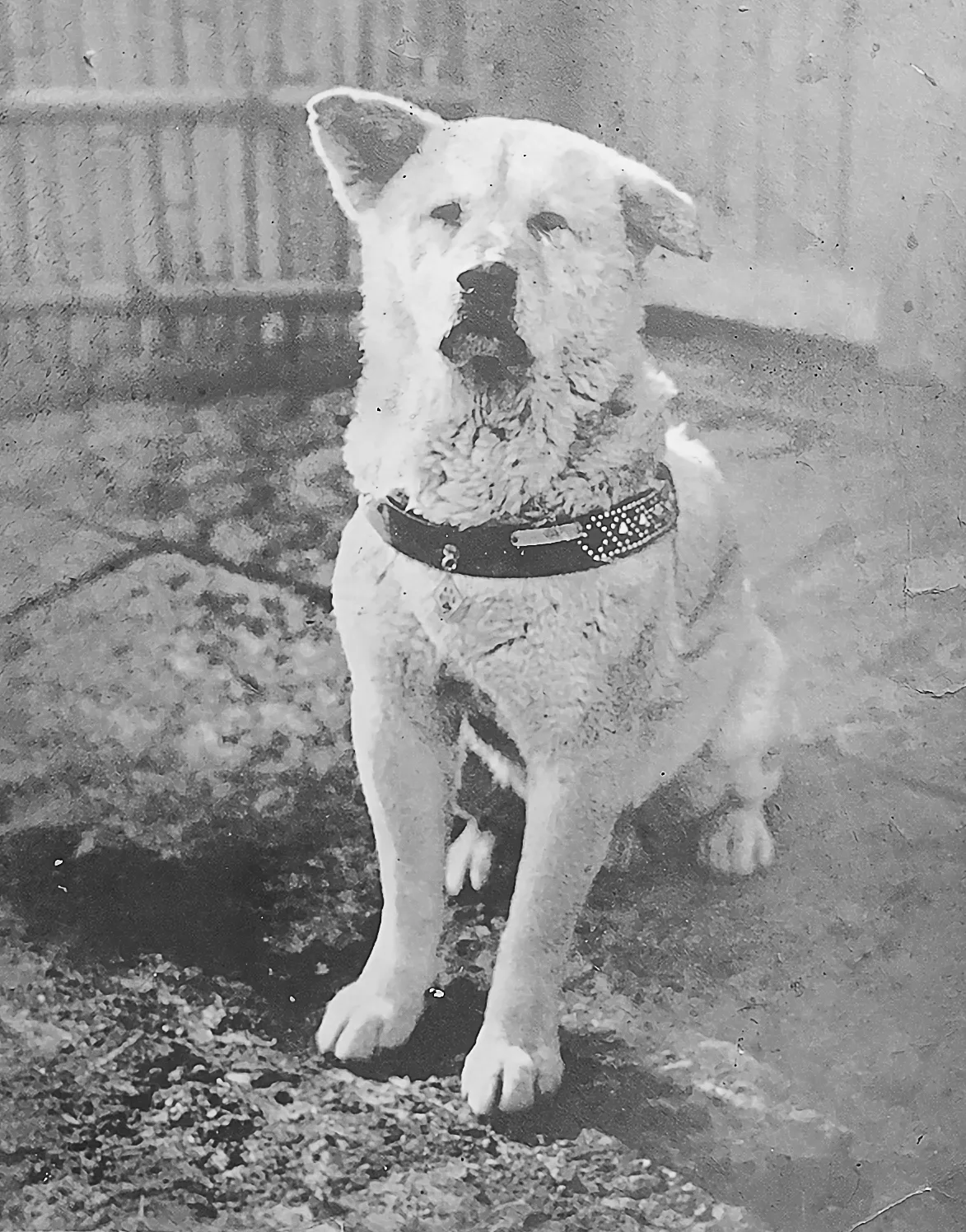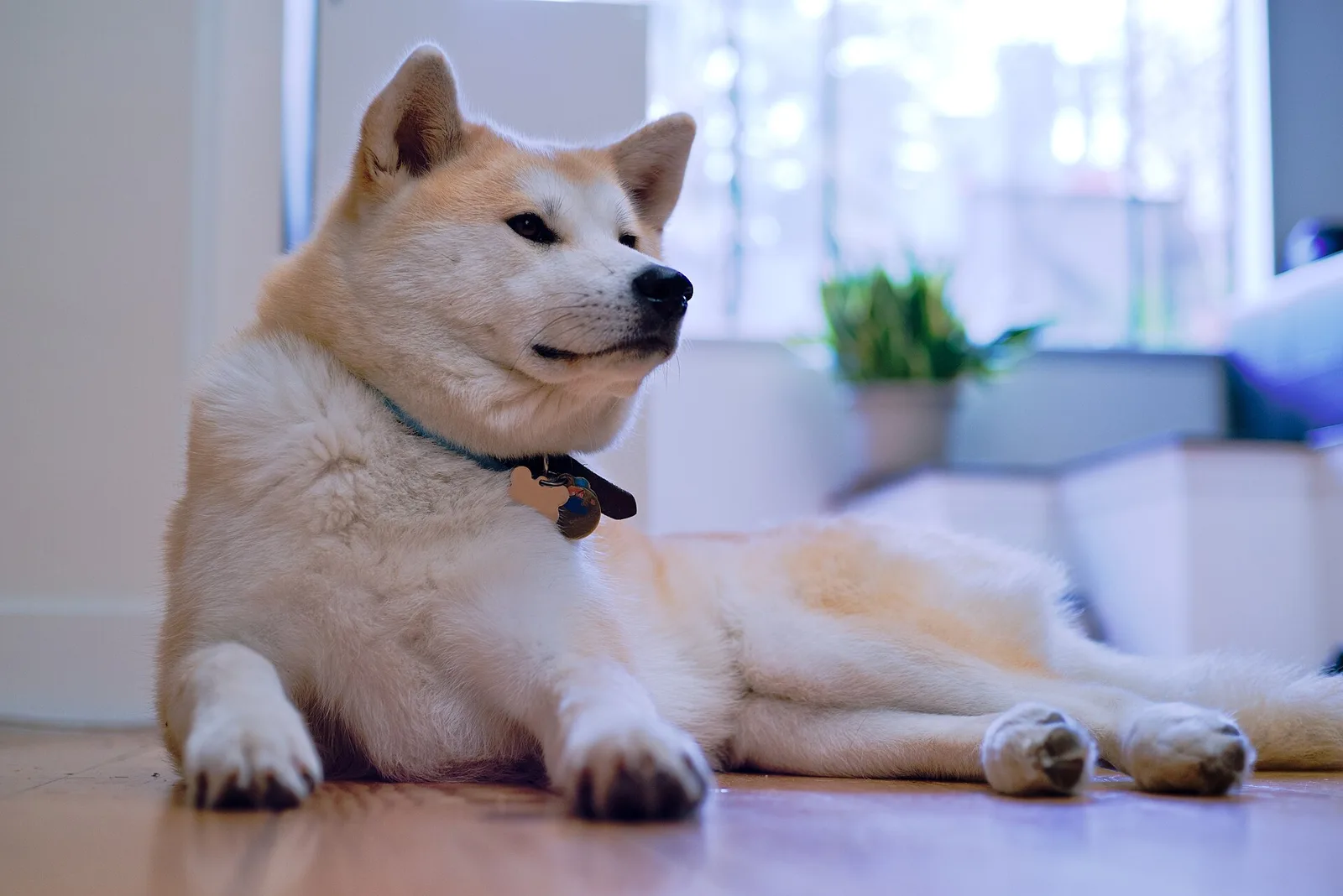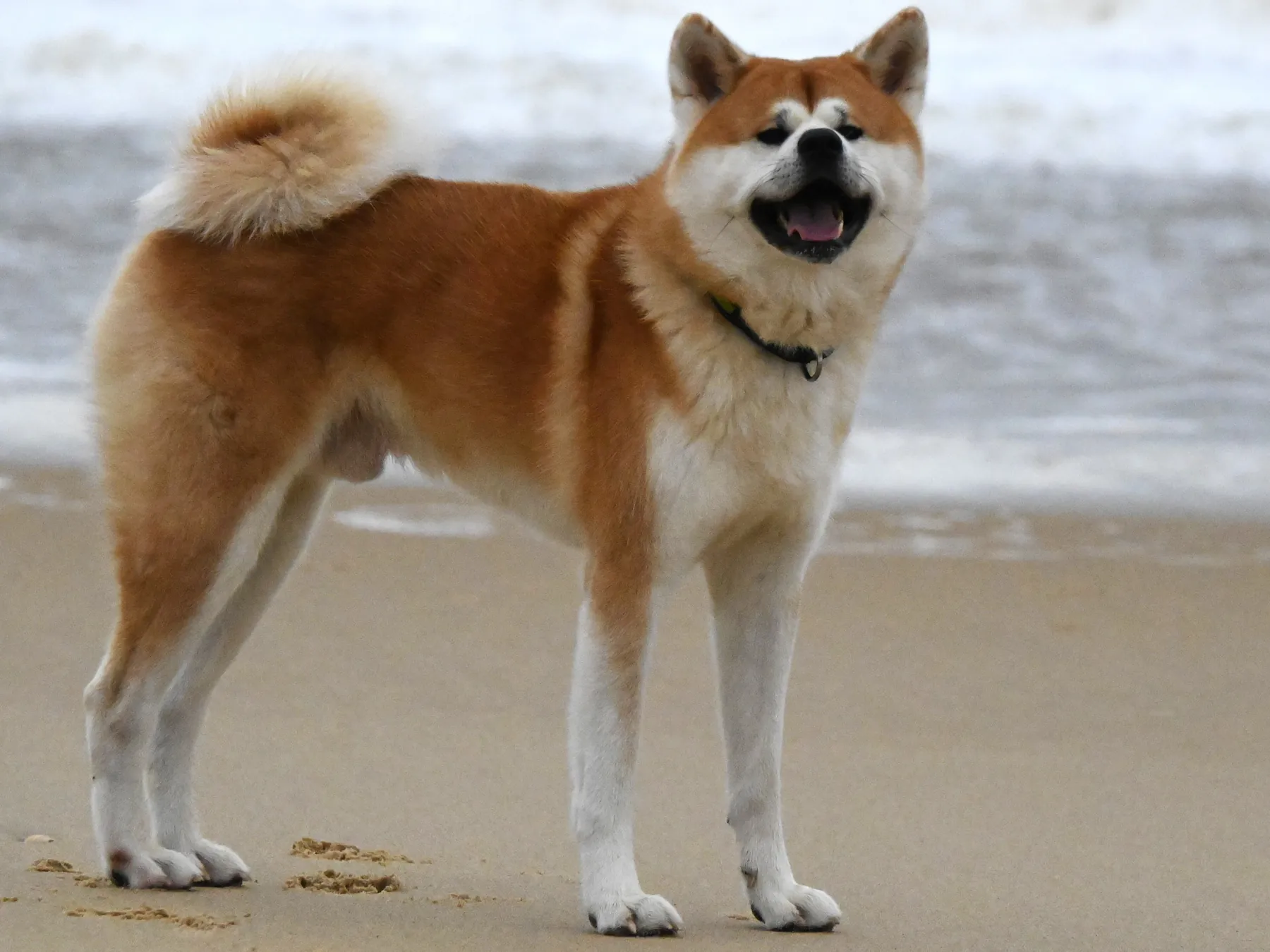
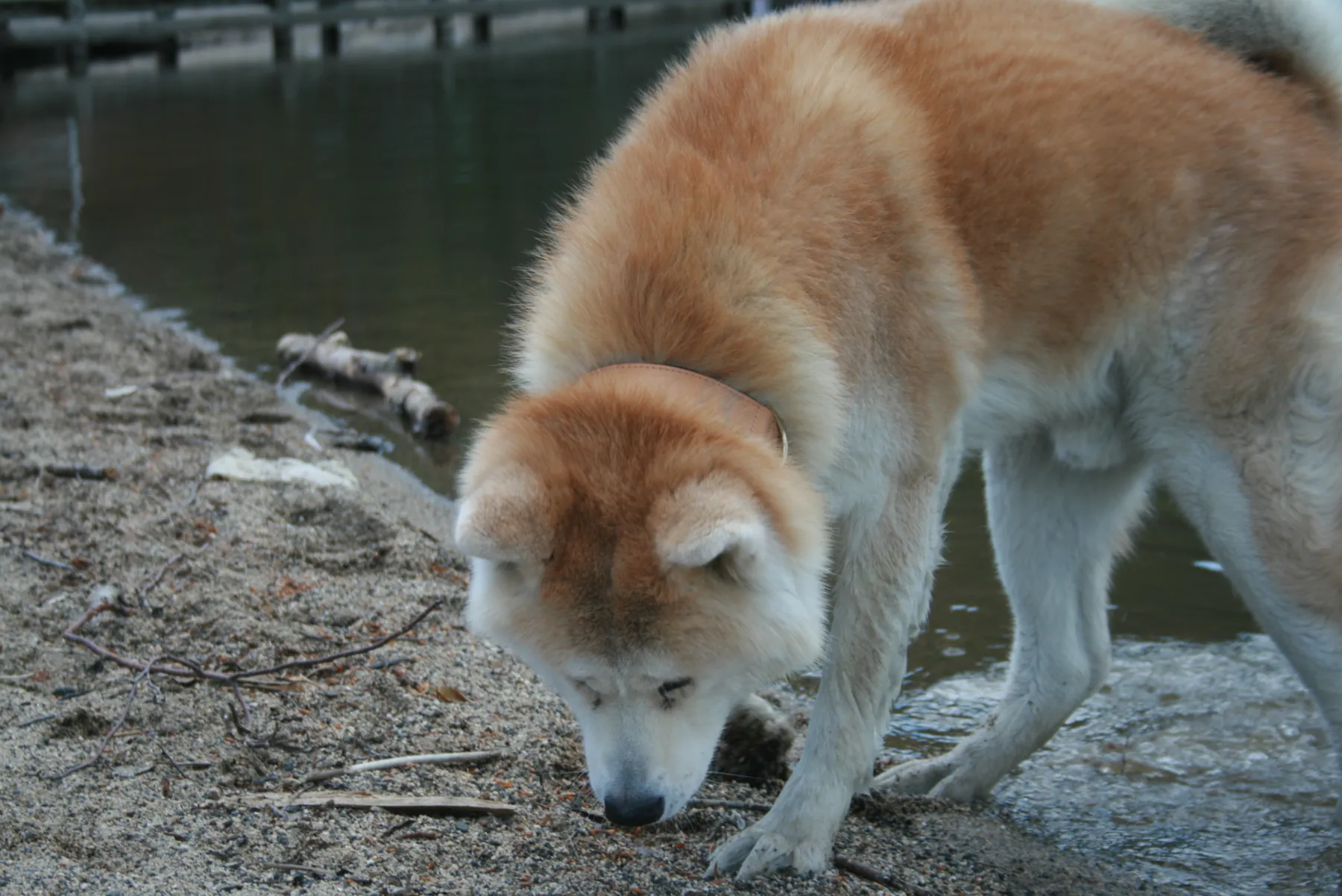
The Japanese Akita and the American Akita are not two varieties of one breed, but two breeds with separate standards: the Japanese Akita is FCI No. 255 and the American Akita FCI No. 344. They share ancestors from Japan's Akita Prefecture, but after the Second World War they developed separately, each on its own continent. The easiest way to tell them apart is the head, the colour and the black mask.
The differences at a glance
| Trait | Japanese Akita | American Akita |
|---|---|---|
| Standard | FCI No. 255 | FCI No. 344 |
| Developed in | Japan | USA, from dogs brought from Japan |
| Height of males | 67 cm (±3 cm) | 66 to 71 cm |
| Height of females | 61 cm (±3 cm) | 61 to 66 cm |
| Head | broad forehead, muzzle tapering but not pointed | massive, a blunt triangle from above, broad and deep muzzle |
| Colours | red, sesame, brindle, white | almost any, including pinto |
| Black mask | disqualifying fault | allowed |
| Urajiro | required, except in white dogs | not required |
| Temperament in the standard | composed, faithful, docile, receptive | alert, dignified, courageous |
Neither standard sets a weight.
Why there are two Akitas
Up to the Second World War the history is shared. In Akita Prefecture, medium-sized dogs helped hunt bears, they were later crossed with Tosas and mastiffs, and in 1931 the Akita was designated a Natural Monument of Japan. The war nearly wiped out the breed, and some breeders crossed their dogs with German Shepherds to save them from being confiscated. We cover this in more detail in the breed guide.
After the war, the Dewa line was briefly very popular in Japan, and its dogs showed the influence of mastiffs and German Shepherds. These were the dogs that American soldiers took back to the USA. American breeders kept developing that type, and for a long time Japanese and American pedigrees were not mutually recognised, so no new dogs from Japan entered American breeding. According to the FCI standard, the American Akita has kept the same type since 1955.
In Japan the path went the other way. Breeders crossed their dogs with Matagi Akitas, the original hunting type, and gradually removed the foreign influence. The result was two breeds: one closer to the original spitz from the mountains of Akita, the other heavier and more massive.
How to tell them apart
The head. This is the surest sign. The American Akita has a massive head that looks like a blunt triangle from above, with a broad, deep muzzle. The Japanese Akita has a broad forehead and a moderately long muzzle that tapers towards the tip, so the head looks lighter.
Eyes and ears. In the Japanese Akita the eyes are almost triangular because the outer corner rises, and the ears are thick, erect and inclined forward. The ears of the American Akita are small in relation to the head and, seen from the side, follow the line of the neck.
Build. The American Akita is heavier, with stronger bone and a deeper chest. The ratio of height to body length in males is 9 : 10, compared with 10 : 11 in the Japanese Akita, which therefore looks slightly longer and lighter.
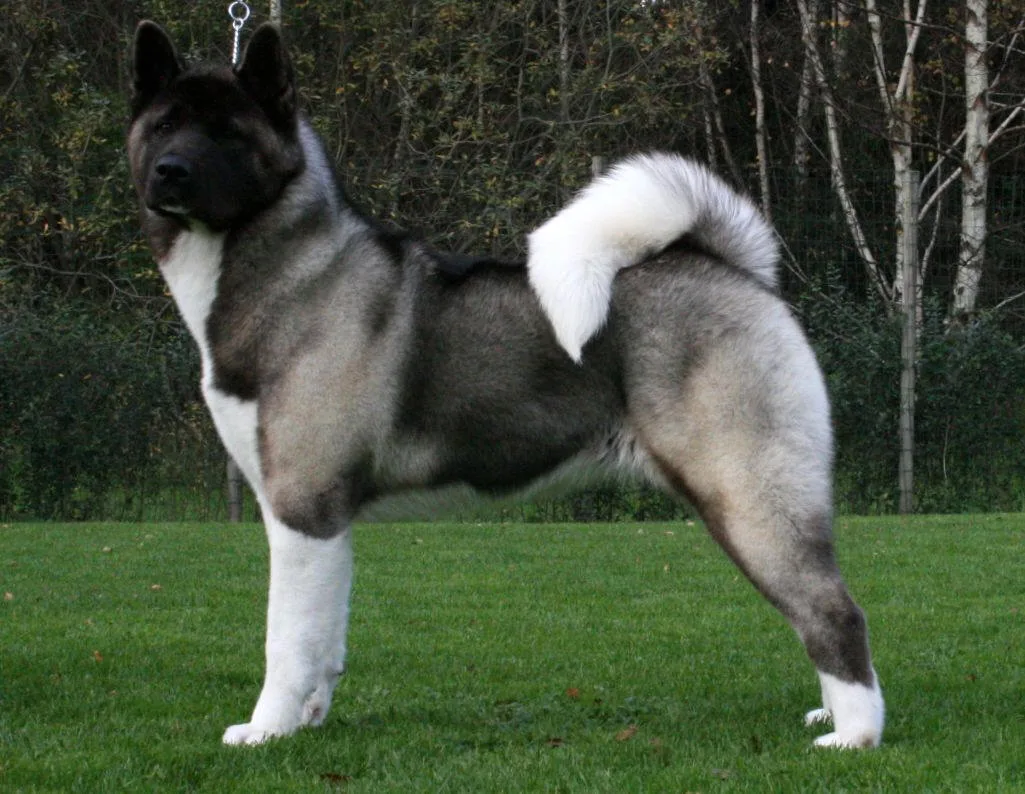
Colours: the most common source of confusion
The Japanese Akita may only be red, sesame, brindle or white, and all of these except white must have urajiro, light hair on the cheeks, neck, chest, belly and the inside of the legs. A black mask and markings on a white ground are disqualifying faults. Each colour is described in Japanese Akita colours.
The American Akita can be almost any colour: red, fawn, white, brindle or pinto, with or without a mask. The undercoat may differ in colour from the outer coat. The standard excludes only the merle pattern and liver colour.
So the rule is simple: if a dog has a black mask or large patches on a white ground, it is not a Japanese Akita under the standard. Red American Akitas usually have a dark mask too, so looking at the face is enough.
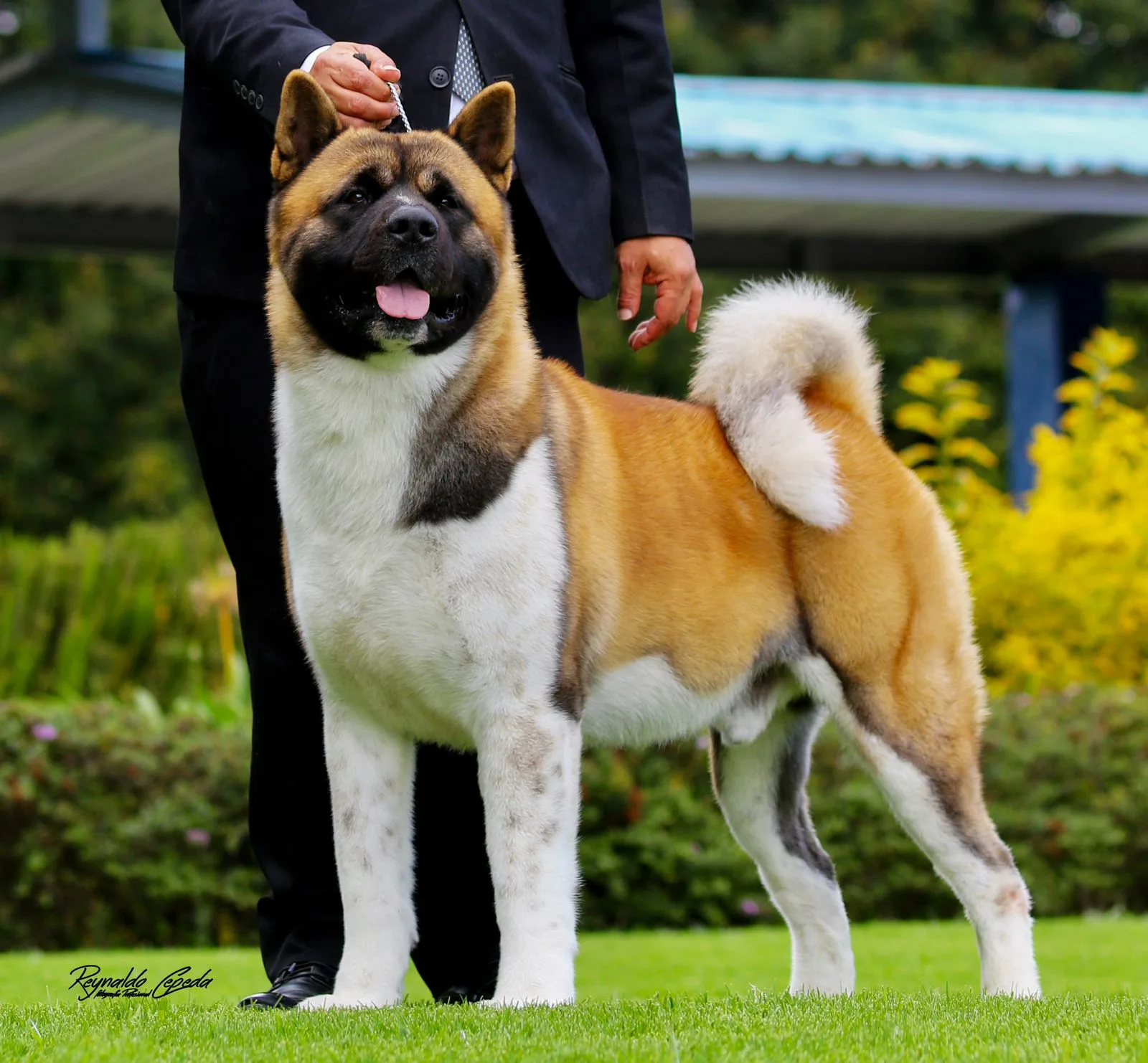
Do they differ in temperament
The standards describe temperament in different words. For the Japanese Akita these are composed, faithful, docile and receptive. For the American Akita the standard lists alert, dignified and courageous, and adds that it may react strongly to other dogs, particularly of the same sex.
In everyday life both breeds are devoted to their family, independent and reserved with strangers. Neither is a dog for everyone, and both need early socialisation and consistent training. How the Japanese Akita lives with people, children and other dogs is described in Japanese Akita temperament.
What to check when looking for a puppy
Adverts often offer "Akitas" without naming the breed, and sometimes "black Japanese Akitas" or Japanese Akitas with a mask. Before buying, check:
- that the pedigree states the exact breed name and standard number, FCI 255 for the Japanese and FCI 344 for the American Akita
- that the pedigree is issued by a kennel club that is a member of the FCI
- that the parents look the way the standard of the breed you are buying describes
Because these are separate breeds, a puppy from a Japanese Akita and an American Akita is neither breed, but a mixed breed.