The Japanese Akita is a calm, independent dog, strongly attached to its family and reserved with everyone else. The FCI standard describes its temperament in four words: composed, faithful, docile and receptive. In everyday life this means a dog that is with you but not under your feet, that does not seek attention from every passer-by and that builds its relationship with you slowly.
Temperament at a glance
| Trait | How it shows |
|---|---|
| With family | affectionate and gentle, likes to be close but is not pushy |
| With strangers | reserved, needs time to build trust |
| Independence | high, likes to assess situations itself |
| With other dogs | often intolerant, especially of dogs of the same sex |
| Barking | rare |
| Training | needs patience, consistency and motivation |
With the family
An Akita shows its best side to its own people. Our Kyo and Eru are affectionate and gentle with the family, like to be in the same room as us, but do not constantly ask for attention. When it is time to rest, Kyo lies quietly and shares the space with us, and as soon as there is a chance to go hiking, he is ready to go. Eru wants more touch and cuddles. Same breed, two different dogs.
That bond does not form overnight. An Akita does not cooperate from day one and does not attach itself to anyone who gives it food. Trust is built over weeks and months, through a calm routine and time spent together. Once it is there, the Akita is a very devoted dog.

With strangers
With strangers the Akita is reserved. It will not go up to everyone and will not ask a stranger to pet it. It is important to understand that this is neither fear nor aggression: the standard lists precisely aggressiveness and excessive shyness as disqualifying faults. A well-socialised Akita is calm with guests, it just does not show excitement.
A few simple rules help guests: ignore the dog at first, do not approach it suddenly or try to pat it on the head, and let the Akita come to them. When approached this way, both Kyo and Eru show their gentle side to people outside the family too.
Many Akitas keep an eye on their home and garden and clearly notice when someone arrives. This is part of the breed, but it should not be encouraged or rewarded.
Independence and stubbornness
The Akita is independent and likes to assess situations itself. A command it does not understand or see the point of will often simply be ignored. Repeating the same exercise twenty times in a row, which works well with some breeds, quickly bores an Akita.
Short training sessions, clear and consistent rules and a reward the dog actually wants work better. Harsh methods do not work with an Akita, because they damage the trust the whole relationship is built on. An Akita will do a lot for you, but because it trusts you, not because it is afraid.
Akitas and other dogs
The Japanese Akita is not a dog-park dog. We had to accept that Kyo would not run around a field with other dogs, but would rather step away and stay with his people. Many Akitas show little interest in other dogs, and they often do not get on with dogs of the same sex, especially once they are adults.
Early socialisation helps an Akita stay calm around other dogs, but it does not mean it will play with all of them. On walks it is best to keep the dog on a lead and not let unfamiliar dogs approach without asking. If you are planning two dogs, a male and a female usually get on better than two dogs of the same sex. That is exactly the pair we have.
Akitas were once hunting dogs, and many have a strong prey drive towards smaller animals. An Akita can live peacefully with a cat it has grown up with, but may react very differently to an unfamiliar cat or a hare on a walk.
Akitas and children
An Akita can live well in a family with children, if it is socialised and the household has clear rules. It usually bonds with the children of its own family and is patient with them, but it is a large, strong dog, so supervision and rules are essential:
- children must not disturb the dog while it is eating or sleeping
- the dog needs its own quiet place to retreat to
- small children and a dog should never be left alone together, however calm the dog is
- your children's friends are strangers to an Akita, so the rules for guests apply to them as well
Socialisation is key
Before Kyo, I only knew Akitas as nervous, unpleasant dogs. Today I know they were poorly socialised. Kyo taught me how much depends on socialisation.
The most important period is roughly from the third to the twelfth week of life, while the puppy is still with the breeder and during its first weeks in a new home. During this time the puppy should calmly and gradually get to know different people, sounds, surfaces, traffic and other dogs. Our puppies get to know household sounds and different surfaces from their first day. Socialisation continues later too, and with an Akita it is better to go slowly than to overwhelm it.
Who the Japanese Akita suits
The Akita is a good choice for people who want a calm, devoted dog, respect its space, enjoy activities such as hiking and are ready for consistent training. It is less suited to those who want a dog that plays with every dog in the park, loves every guest and obeys without question.
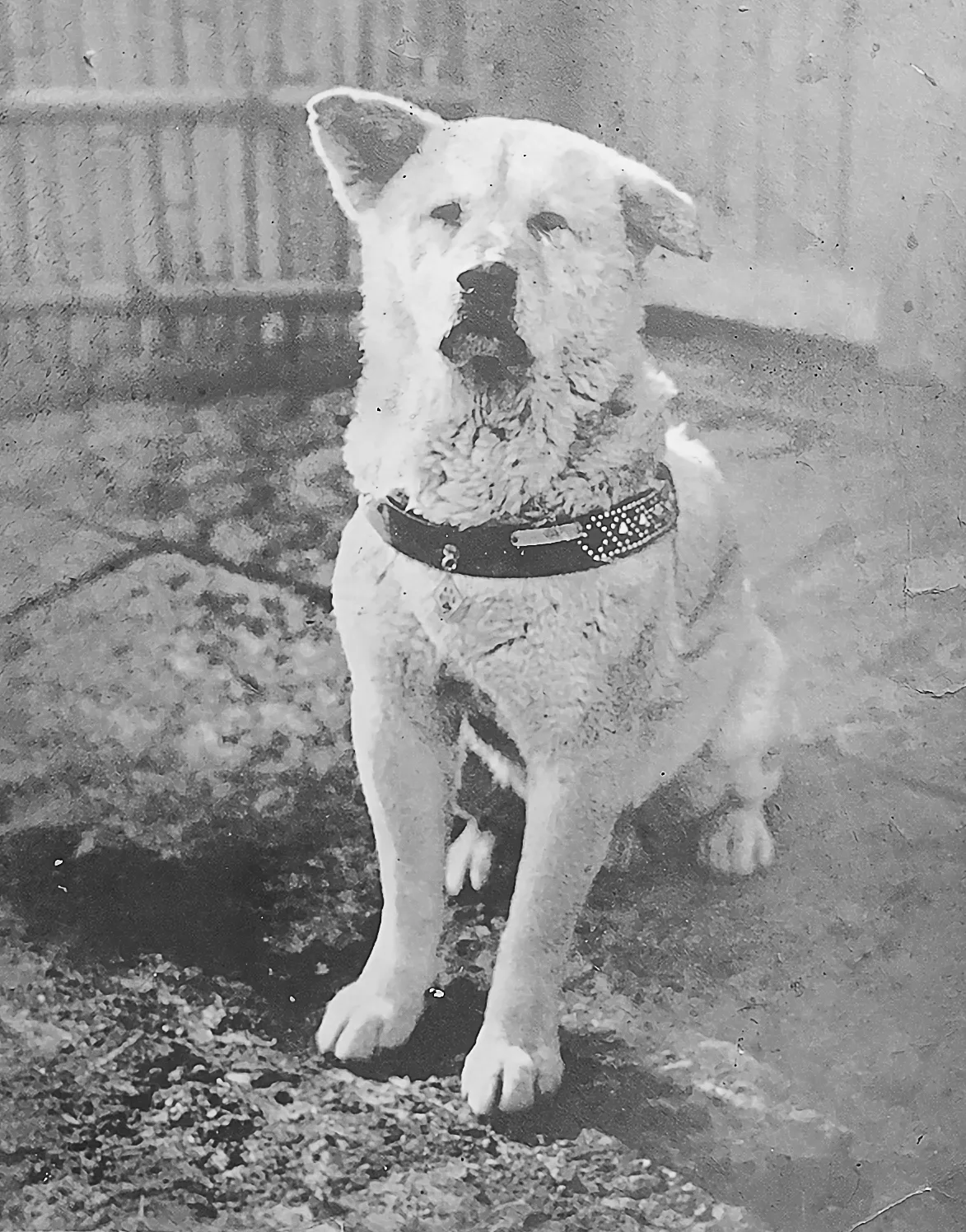
If you are comparing breeds, read how the Japanese Akita differs from the American Akita. The best-known example of Akita loyalty is Hachikō, the dog who waited almost ten years for his owner at a station in Tokyo.