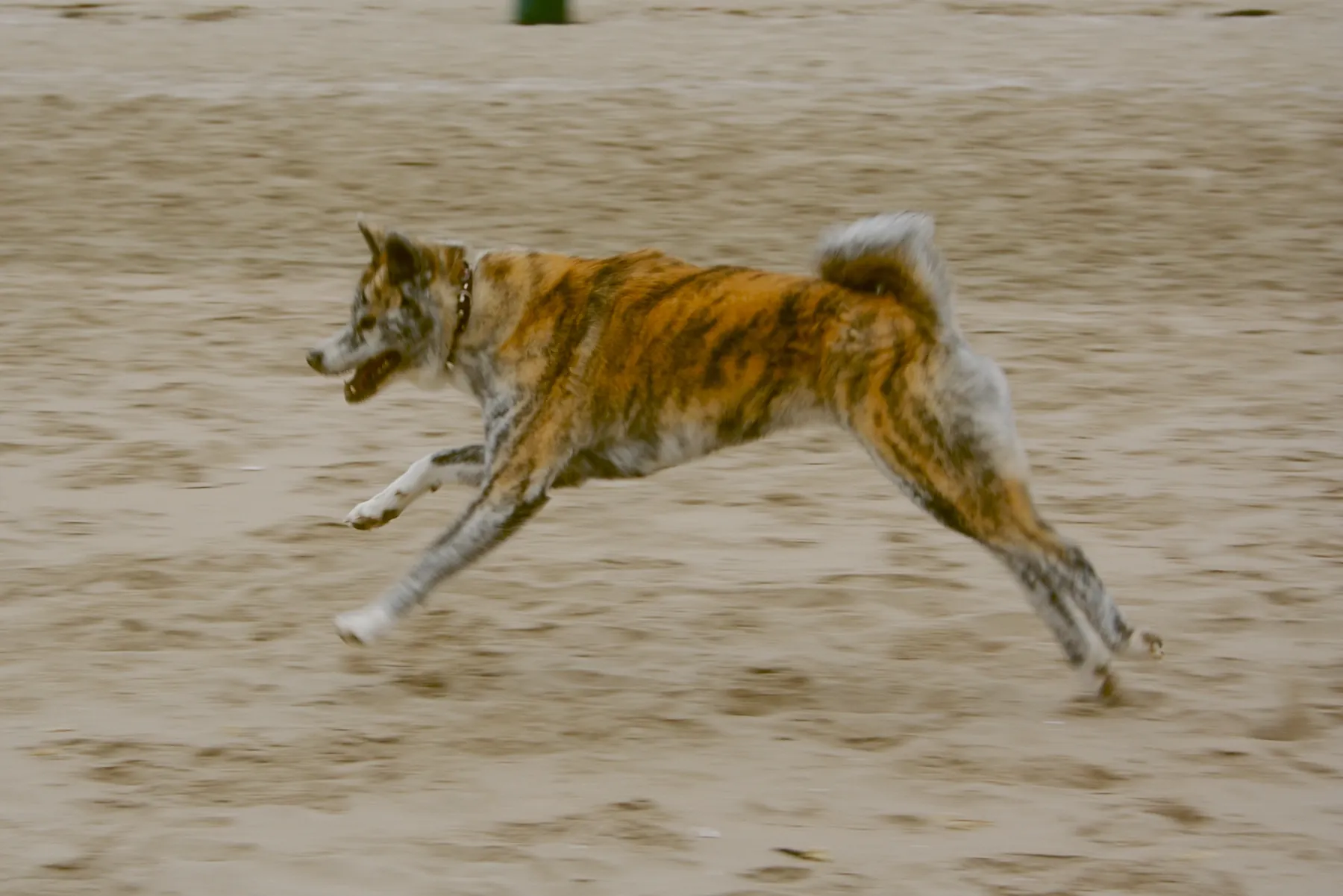
A Japanese Akita can be red, sesame, brindle or white. These are the only four colours allowed by the FCI standard No. 255, and all of them except white must have urajiro, light hair on specific parts of the body.
What is urajiro
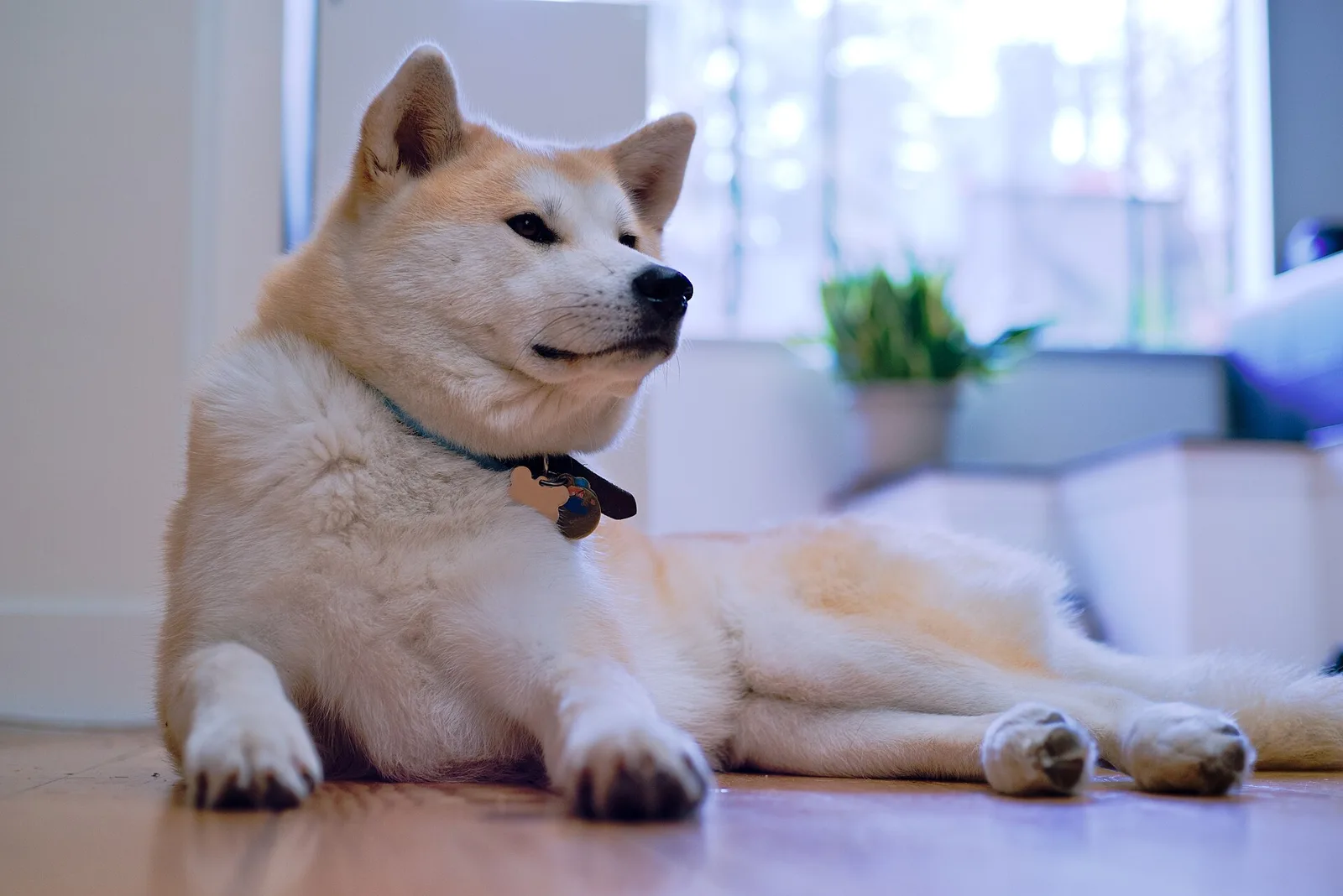
Urajiro is the Japanese name for the light, whitish hair on the sides of the muzzle, the cheeks, under the jaw, on the neck, chest, belly, the underside of the tail and the inside of the legs. It gives the Akita its light cheeks and chin, and makes the chest and belly lighter than the back.
Red, sesame and brindle Akitas must have urajiro. A white Akita is light all over, so the standard does not require it.
Red
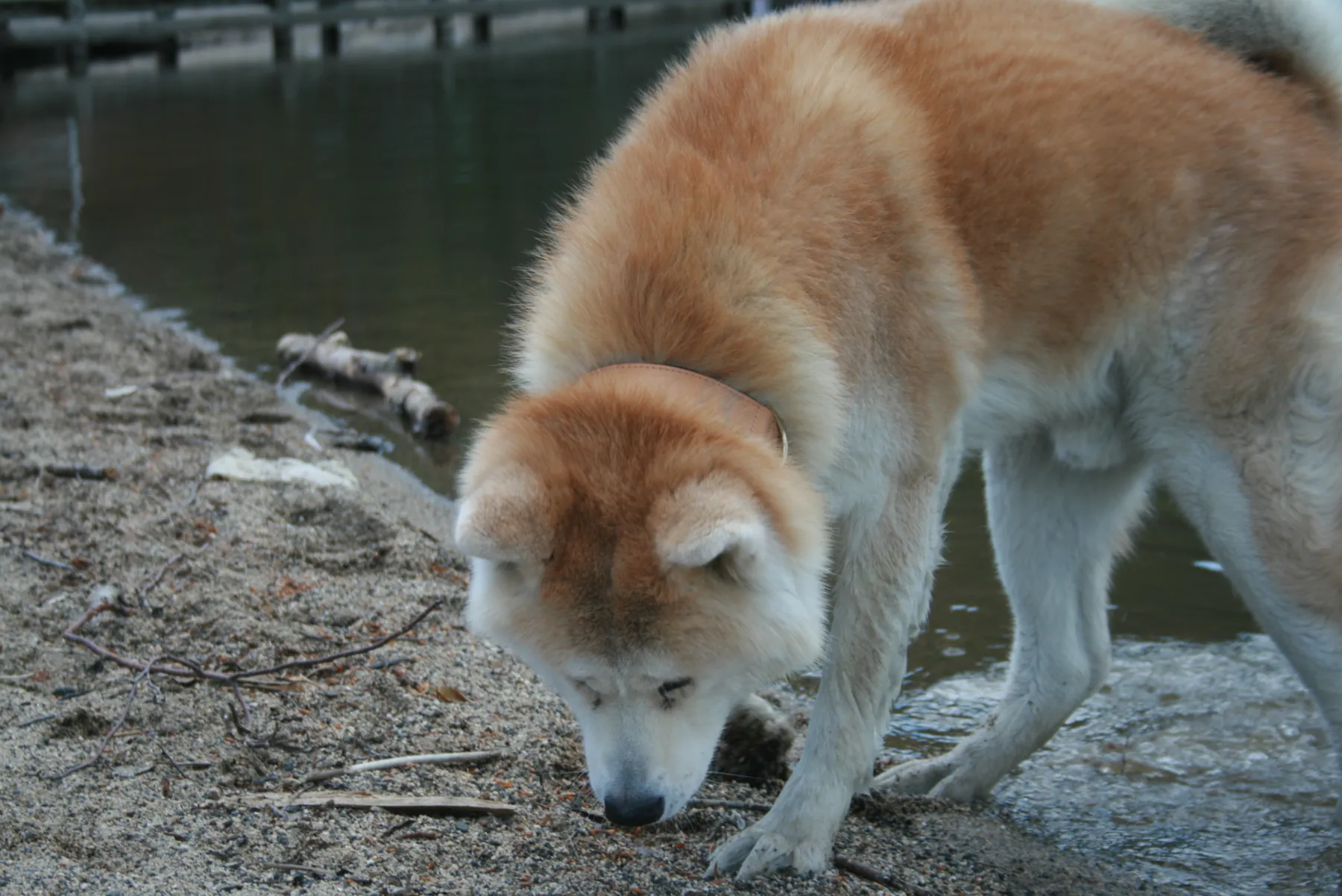
In the standard this colour is called red fawn. The body is a warm reddish colour, and the urajiro is clearly visible on the face, chest and legs, as in the photo above. You can see a whole red Akita at the top of the main guide page.
Sesame
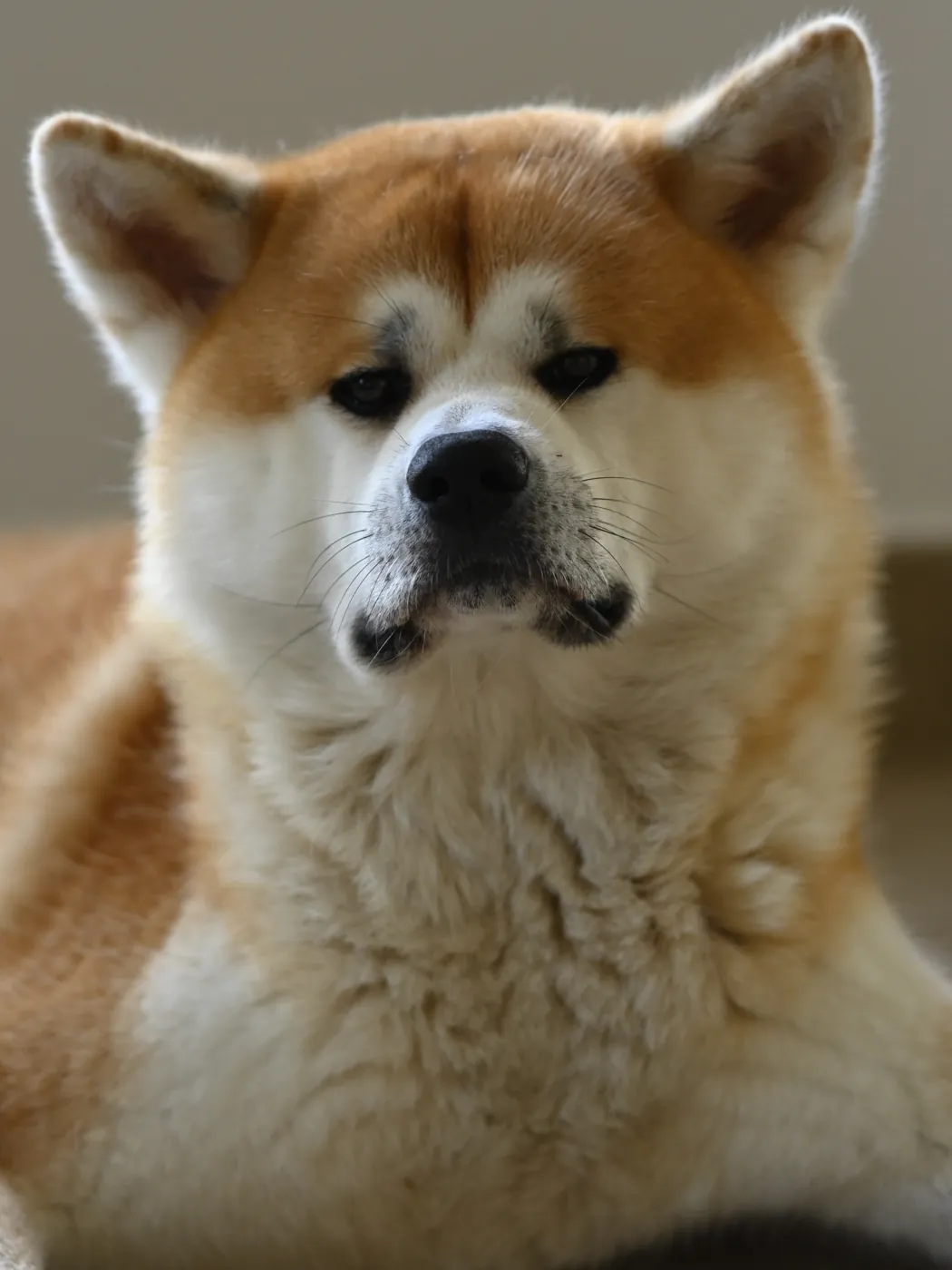
In a sesame Akita, the red hairs have black tips. This makes the body look as if a darker layer has been sprinkled over a red base, most visible on the back. A sesame Akita must have urajiro too.
Brindle
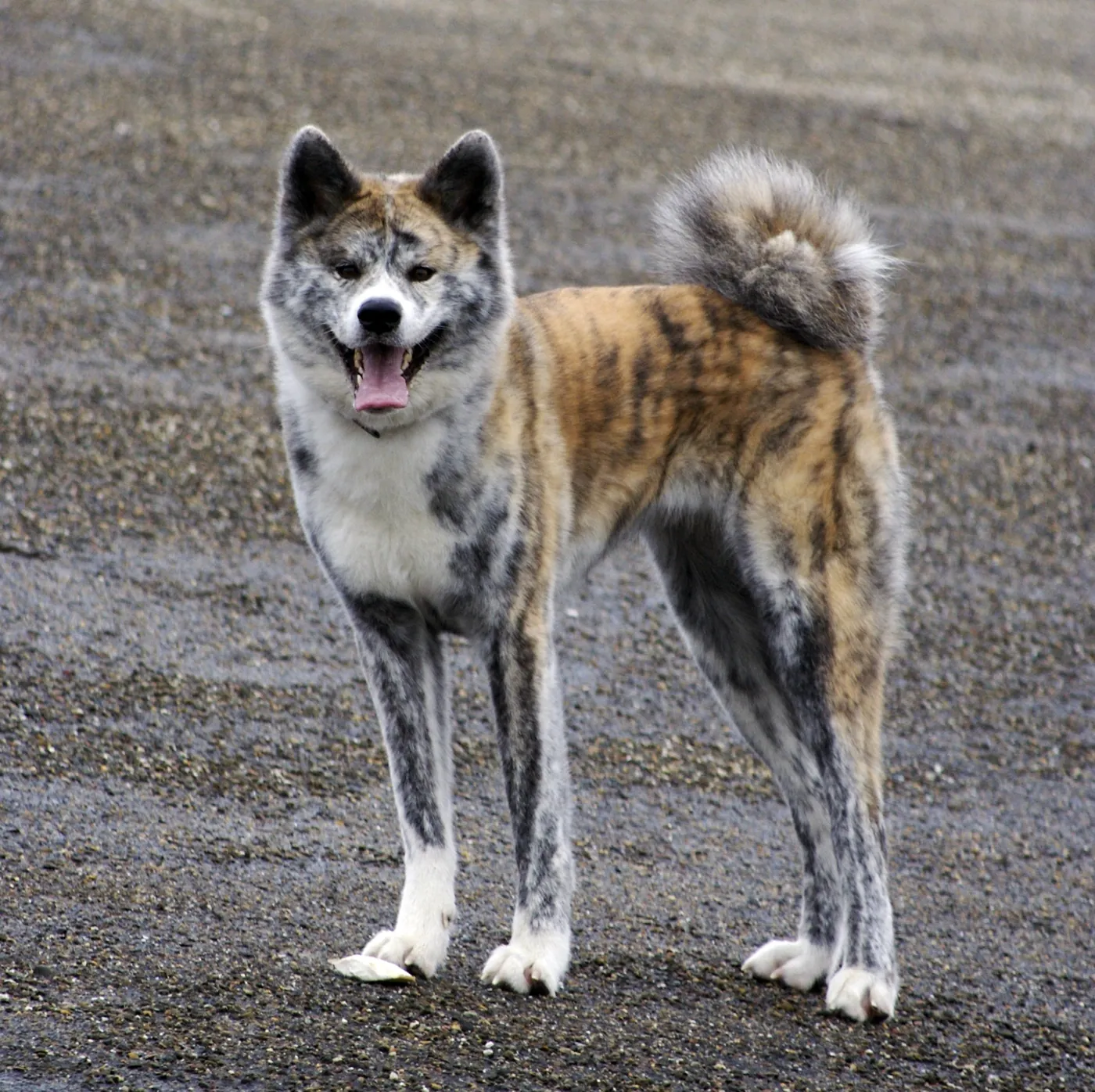
A brindle Akita has dark stripes over a lighter base. The stripes are most visible on the body and legs, and the urajiro is still clearly visible on the face, chest and the inside of the legs, as the standard requires.
White
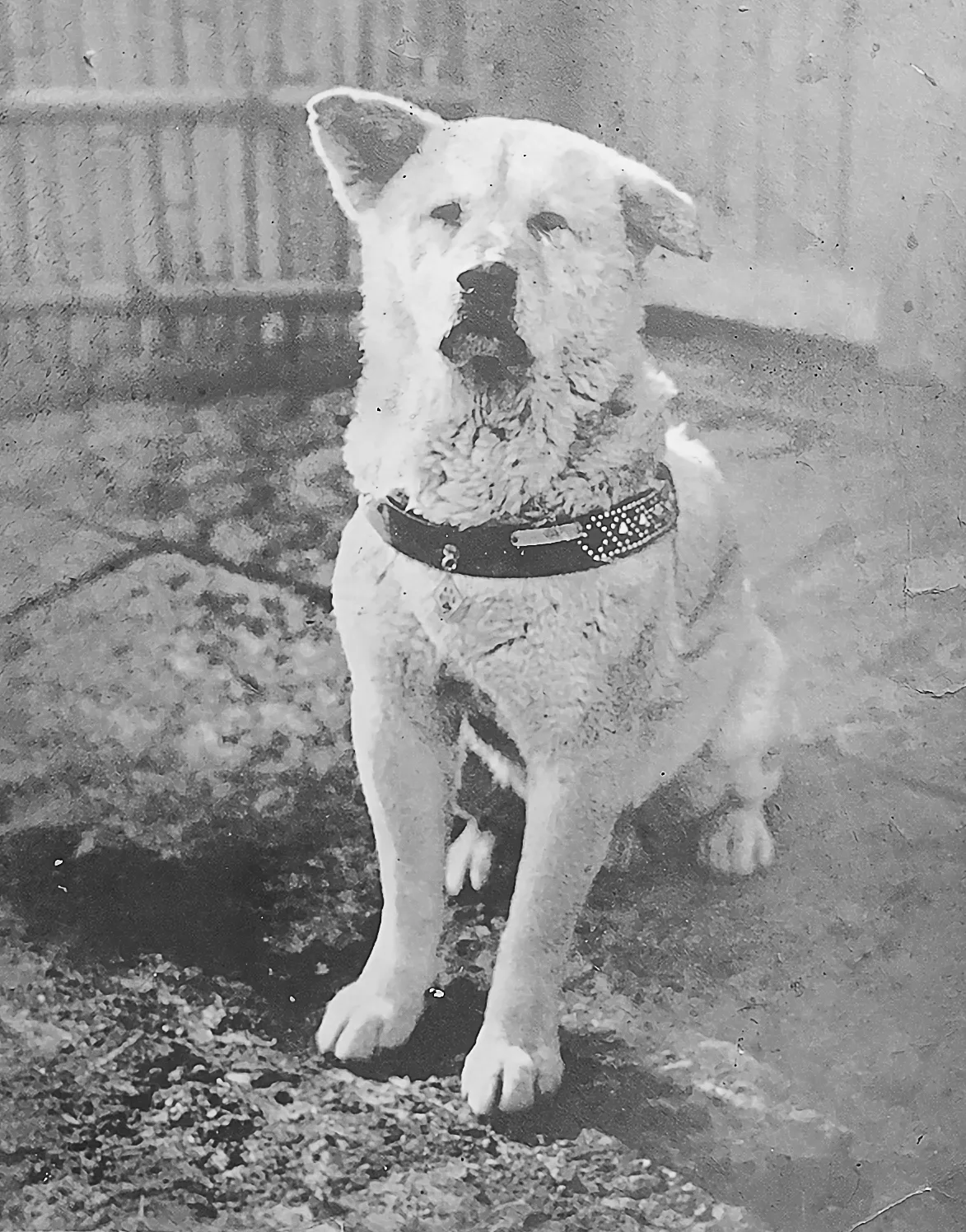
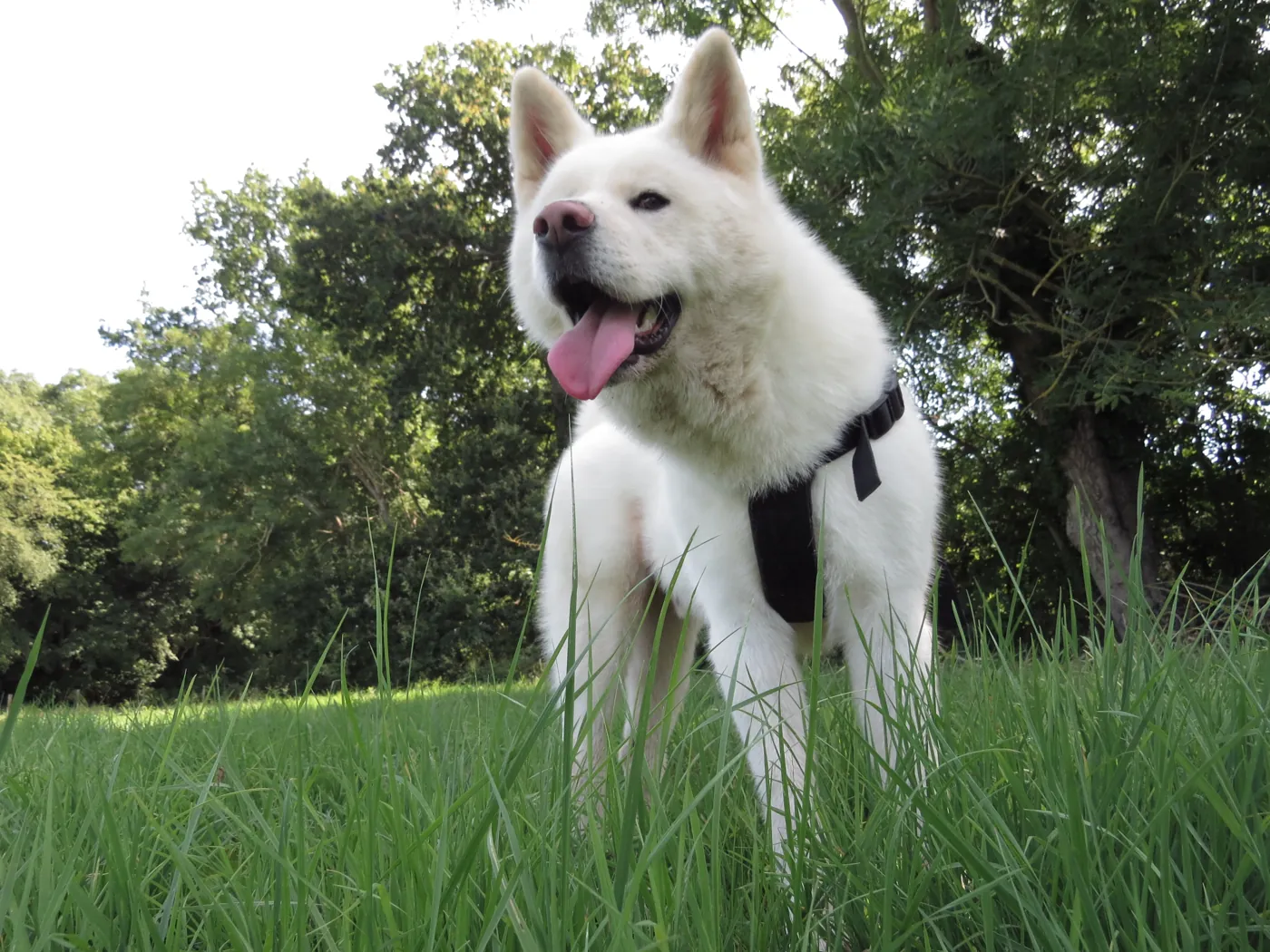
A white Akita is evenly white and is the only one that does not need urajiro. In white dogs the standard also allows a slight, diffuse lack of pigment on the nose, but a black nose is still preferred.
Which colours are not allowed
The Japanese Akita standard lists the allowed colours, so everything else falls outside the breed. Two things are explicitly named as disqualifying faults:
- a black mask on the face
- markings on a white ground, that is, the patched colouring of a pinto
A long, shaggy coat is also a disqualifying fault, but that is a matter of coat, not colour.
Why black and pinto Akitas are offered
A black mask, pinto colouring and almost any other colour are allowed in the American Akita (FCI No. 344). Its standard literally says it may be any colour, with or without a mask.
If someone offers you a black or pinto Japanese Akita, that dog does not meet the Japanese Akita standard. It may be an American Akita or a mixed breed. Before buying, always ask for the pedigree and check that it says Japanese Akita (FCI 255).